
Connecting the Digital Workplace to SBC as a Service
Streamlining and accelerating the connectivity process with VOSS automation

Author: Tim Jalland
Solution Manager, VOSS Solutions
Wednesday February 28, 2024
New capabilities in cloud collaboration platforms such as Microsoft Teams and Cisco Webex gather a lot of attention. Deployments and changes within the underlying infrastructure – session border controllers (SBCs) – are happening at a similar pace to provide the foundation for connectivity into these platforms, but generate less hype.
And what’s driving this demand? A requirement to connect the cloud, older legacy PBX systems, and the public telephone network to SBC services, to complete the solution.
Rationalization of older technologies is also playing its part, in some cases driving the timeline; carriers are moving to fully IP VoIP services and away from more traditional digital and channel technologies.
Finally, partners and customers are consolidating regional and local connectivity and break-out into central ‘super-size SIP engines’, moving these to a fully OpEx style charging model, and away from a CapEx model, making savings and keeping budgets in line with demand.

New opportunities to get to grips with
The need for new SBC connectivity is growing and is driven by some key use cases:
- Organizations are bringing their own carrier or PSTN services (BYOC) but then looking for a straightforward and cost-effective mechanism to connect these into cloud services such as Microsoft Teams and Cisco Webex. This is often the case where existing contracts and number ranges are already in place.
- Integration between cloud platforms, legacy PBX equipment, and the PSTN are driving service continuity and migration projects.
- Regulatory reasons, perhaps for certain regions or locations, around topics such as data sovereignty and compliance recording.
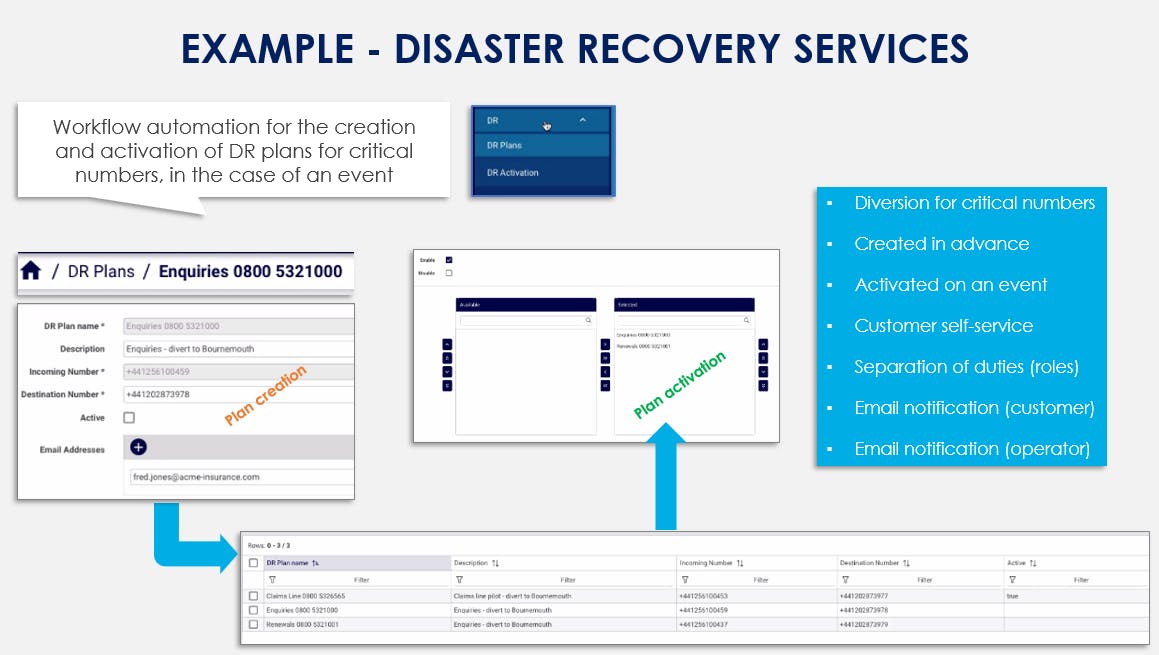
- Business continuity, requiring close control on collaboration services as part of a disaster recovery plan, catering for outages on cloud platforms.
- Complex deployments with specific business requirements, within market sectors such as Banking, Government and Healthcare.
The power of automation – Taking a closer look
To streamline and accelerate the SBC delivery process, where should you start? That’s where VOSS Automate can help, and here’s what to expect:
Single portal: VOSS Automate enables you to control multiple SBC systems, deployed in multiple data centers and the cloud for redundancy, through an intuitive single portal with change tracking. This can be operated and tied into ordering processes on a service desk, without the need to rely on highly skilled technicians.
Multi-vendor: VOSS Automate offers a single and intuitive portal to manage all units in the entire SBC estate alongside other multi-vendor services such as cloud and on-premises platforms.
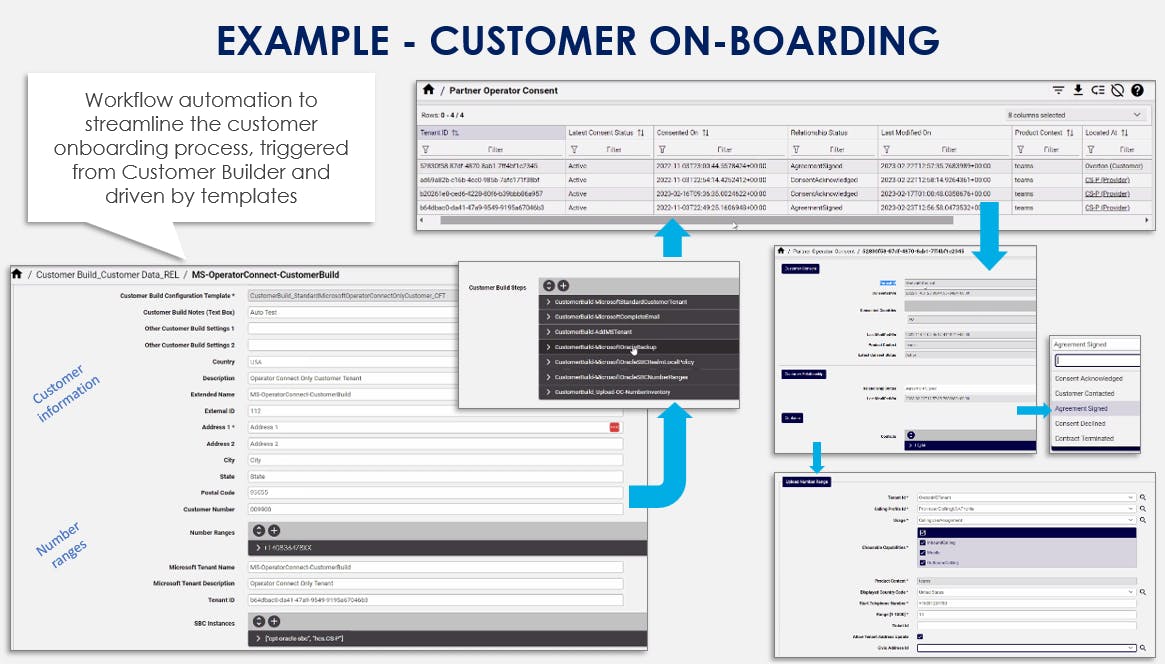
Automation: VOSS Automate gives the ability to streamline with automation, workflows, and templates the deployment of new customers and units by up to 40%. It also offers the flexibility to offer zero-touch onboarding, and manage number ranges and tricky local routing tables.
Hierarchy: VOSS Automate allows you to segment the configuration, supporting shared SBC systems and individual dedicated units as required, and presents an overall view with the ability to drill into configurations for individual customers and units.
Number management: VOSS Automate empowers you to track and manage number inventory – individually and with ranges – with the ability to segment and view overall and at a customer or unit level.
Charging and reporting: VOSS Automate integrates with charging, reporting, and billing systems to ensure accuracy and provide timely information to customers and units when required.
Technology: VOSS Automate keeps up with – and takes advantage of – the very latest in SBC technology, APIs, and features, without the technical complexity of local product command interfaces.
But don’t just take our word for it. Here are some screenshots from a recent project with Oracle SBCs, helping the customer with zero-touch end user onboarding (to a provider) and disaster recovery (as a provider up-sell opportunity).
Next steps
Automation delivers efficiency and speed, realizing benefits early whilst reducing overall cost of ownership. But it’s also important to start from the right place, and that involves a process called discovery. Without this, there’s every chance that the next SBC deployment will be oversized and over budget.
VOSS Insights provides a rear-view mirror into previous call activity and trending along with a probe into the existing network to get a forward-looking live view. Information can be correlated over a period of time and then blended with cost data to provide a realistic capacity plan and associated budget. In many deployments, this will be less than expected and can drive typical monthly savings of 15% to 20%. There’s a reference here to a recent company that VOSS worked with to unlock significant cost savings.
More to come on this in our next blog!
You’ll find more details about SBC integration here, or please get in contact here.
Keep up to date with our latest blogs and subscribe today