Your digital workplace is growing – but your control isn’t





Author: Bill Dellara,
Chief Product Officer,
VOSS Solutions
Tuesday April 07, 2026
Do you ever feel like your digital workplace platform is expanding in the right direction, but you are less and less confident about how well it’s actually being managed?
There is no doubt that the digital workplace has never been more accessible. With platforms like Microsoft Teams, Webex, and a growing ecosystem of cloud telephony and collaboration tools, organizations have more choice than ever before. More tools, more flexibility, and more ways to connect. But beneath the surface, a different reality is emerging. As the digital workplace expands, control is quietly eroding.
Many organizations have built their communications environments organically over time. A collaboration platform here, a telephony solution there, perhaps a contact center layered on top. Each decision made sense in isolation, often driven by immediate business needs or departmental requirements. The result is a patchwork of platforms that function individually but lack cohesion as a whole. This is where the challenge begins.
|
|
Hidden complexities |
A growing digital workplace brings complexity that is not always immediately visible. Each platform comes with its own administration model, its own policies, its own reporting tools, and its own limitations. IT teams are left managing multiple control panels, often duplicating effort across systems just to maintain a baseline level of service. What appears to be a modern, flexible environment quickly becomes operationally heavy and difficult to govern.
The impact is felt across the organization. Users experience inconsistencies in how services are delivered and supported. Onboarding a new employee might be seamless in one system and manual in another. Policy enforcement varies, creating gaps in compliance and security. Troubleshooting becomes slower and more complex, as teams must navigate multiple systems to identify and resolve issues. At the same time, visibility starts to degrade.
In a fragmented digital workplace environment, there is no single source of truth. Organizations struggle to answer fundamental questions about their communications estate. Which services are being used? Where are licenses underutilized? How is user experience trending? Where are the risks? Native reporting tools provide partial answers at best, but they rarely offer a unified, cross-platform view.
This lack of visibility has real consequences. Without clear insight, organizations cannot effectively optimize costs, enforce governance, or plan for growth. Decisions are made based on incomplete information, and inefficiencies persist unchecked. Over time, this creates a compounding effect, where small gaps in control evolve into significant operational and financial challenges.
|
|
Navigating an ever-evolving digital environment |
A growing digital workplace brings complexity that is not always immediately visible. Each platform comes with its own administration model, its own policies, its own reporting tools, and its own limitations. IT teams are left managing multiple control panels, often duplicating effort across systems just to maintain a baseline level of service. What appears to be a modern, flexible environment quickly becomes operationally heavy and difficult to govern.
The impact is felt across the organization. Users experience inconsistencies in how services are delivered and supported. Onboarding a new employee might be seamless in one system and manual in another. Policy enforcement varies, creating gaps in compliance and security. Troubleshooting becomes slower and more complex, as teams must navigate multiple systems to identify and resolve issues. At the same time, visibility starts to degrade.
In a fragmented digital workplace environment, there is no single source of truth. Organizations struggle to answer fundamental questions about their communications estate. Which services are being used? Where are licenses underutilized? How is user experience trending? Where are the risks? Native reporting tools provide partial answers at best, but they rarely offer a unified, cross-platform view.
This lack of visibility has real consequences. Without clear insight, organizations cannot effectively optimize costs, enforce governance, or plan for growth. Decisions are made based on incomplete information, and inefficiencies persist unchecked. Over time, this creates a compounding effect, where small gaps in control evolve into significant operational and financial challenges.
What makes this particularly critical is that the digital workplace is no longer static. It is constantly evolving. New tools are introduced, integrations expand, and user expectations continue to rise. Employees expect seamless experiences regardless of the underlying platform. They do not think in terms of systems; they think in terms of outcomes. When the environment fails to deliver that consistency, productivity suffers.
The root of the problem is not the tools themselves. Each platform plays an important role. The issue is the absence of a unifying layer that brings control, consistency, and intelligence across the entire digital workplace ecosystem.
|
|
A single pane of glass |

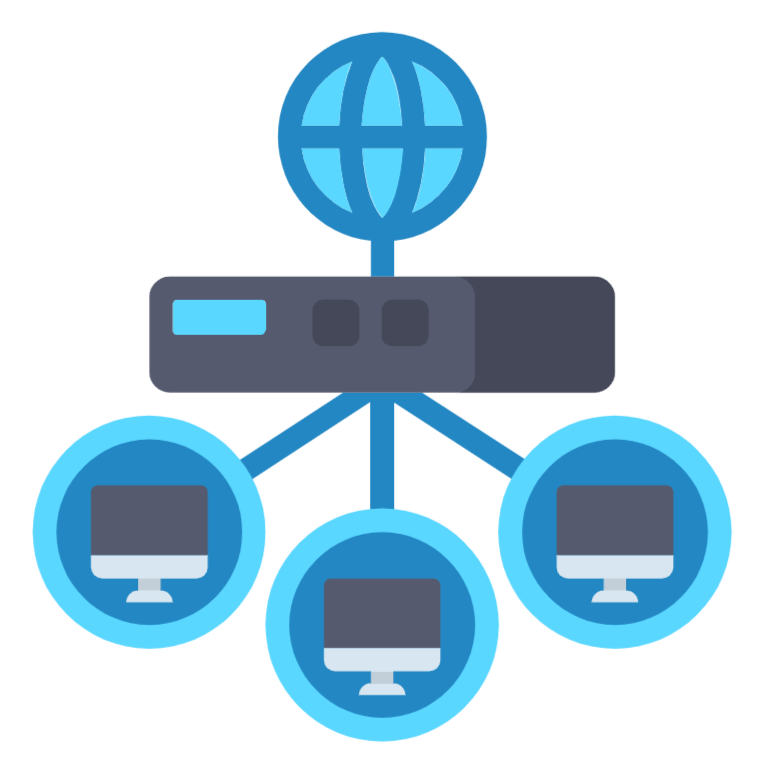
Businesses – certainly VOSS customers – are starting to shift their approach. Rather than managing each platform in isolation, they introduce a centralized management and automation layer that sits above the individual systems. This layer standardizes provisioning, enforces policies consistently, and provides a single pane of glass for visibility and control. It also becomes a single point of integration into wider business processes and the company’s broader automation fabric, connecting the digital workplace to the systems that drive the business. The impact is transformative.
Provisioning becomes faster and more reliable, with automated workflows replacing manual processes. Through integration with adjacent business systems, provisioning can be triggered and governed as part of end-to-end processes such as onboarding and IT service management. Governance is applied uniformly, reducing risk and ensuring compliance across the environment. IT teams gain real-time insight into usage, performance, and user experience, enabling them to move from reactive support to proactive management. At the same time, the digital workplace no longer operates in isolation but as an embedded component of broader operational workflows. Most importantly, the organization regains control of its digital workplace strategy, aligning it with broader business objectives.
This shift is not just about operational efficiency. It is about unlocking the full value of the digital workplace. When properly managed and integrated into your company’s wider automation fabric, the digital workplace becomes a driver of productivity, collaboration, and innovation. By acting as a connected layer within enterprise processes, it enables more seamless data flow, reduces friction between systems, and supports more intelligent, automated decision-making.
Organizations that fail to address this challenge risk falling behind. As their digital workplace continues to grow, so too does the complexity, the cost, and the potential for disruption. What once felt like flexibility becomes fragmentation, and what was intended to enable the business starts to hold it back.
To truly realize the value, VOSS customers move beyond a collection of tools and toward a cohesive, intelligently managed ecosystem. For those of you who are starting to feel the strain of growing complexity, now is the time to take a closer look at how your digital workplace is really operating – and whether it is delivering the control, visibility, and value your business needs.
Please reach out to us to discuss this in more detail.
Keep up to date with our latest blogs and subscribe today